Almotamar.net - The Arab League (AL) has welcomed Sunday the signing of Sana'a Declaration between the movements of Fatah and Hamas to begin the dialogue based on the Yemeni initiative.
The AL Secretary General Amru Mousa, in a press release reported by the Kuwaiti news agency KUNA, described the agreement as " a positive step toward healing the Palestinian rift", expressing his hope of the beginning of the Palestinian dialogue in an immediate form in the manner enabling the Palestinian people to face the difficult challenges that the coming period submits in the light of achieving the required progress in the track of the Palestinian Israeli negotiations.
Mousa has also praised the efforts exerted by the Yemeni president Ali Abdullah Saleh that led to signing the agreement. He indicated that following up the subject will be among the major issues to be discussed at the Arab summit that will be held in Damascus next week.
The movements of Fatah and Hamas had earlier on Sunday signed Sana'a Declaration by accepting the Yemeni initiative for healing the rift in the national Palestinian rank and enhancement of the Palestinian unity for the achievement of the Palestinian people interest and serving their just cause.
The United Arab Emirates acknowledged on Tuesday that two of its pilots were killed when their military aggression plane crashed over Jawf province, a military official said
The official added that the aggressive crashed plane was an apache that was
Artillery of the army and popular shelled a gathering of Saudi-paid mercenaries in al-Moqadra area in Serwah district of Marib province, a military official said on Tuesday.
Meanwhile, dozens of Saudi-paid mercenaries were killed and others injured in Wadi al-Theek in the district, the official added.
The army and popular forces carried out on Monday unique military operations in Taiz province.
A military official said that a number of Saudi-paid mercenaries were killed at the hands of the army and popular forces in al-Jazami Hill in al-Kadaha area in al-Ma'afer district.
A Saudi aggression fighter jet targeted a citizen's car driving in Fara area of Kutaf district in Saada province overnight, killing the driver and injuring his friend, a security official said on Monday.
The army artillery and popular committees launched a fierce attack on Saudi-paid mercenaries' sites in Jawf province, a military official said on Monday.
The attack destroyed a military vehicle belonging to the mercenaries and killed all on board in Sabran area in khab and shaaf district.
Scores of Saudi enemy soldiers were killed and injured on Sunday when the army and popular forces repelled a Saudi military attempt to sneak into Shurfah site in the border province of Najran, a military official said.
The operation was accomplished successfully against the Saudi
The army and popular committees have killed a total of 18 Saudi-paid mercenaries in sniper operations over the past hours in the central province of Marib, a military official said on Sunday.
Ten mercenaries were killed in Nehm district and eight others were killed in Serwah district, said the official.
Saudi aggression warplanes have launched more than 49 airstrikes over the past hours on several residential areas across Yemen, a security official said on Sunday.
The airstrikes targeted the areas of Malahiz and Husama in Dhahir district, and areas Thuban, Masahif and Sdad in Bakim district of northern Saada province.


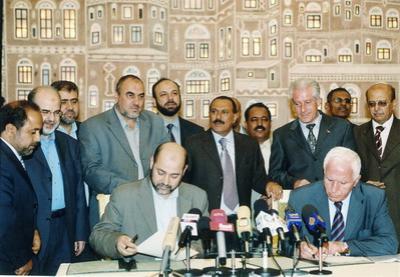
 AL welcomes signing of Sana'a Declaration between Fatah and Hamas



