Almotamar.net - President Ali Abdullah Saleh. Commander in Chief of the armed forces affirmed Monday the necessity of taking care of the developed qualitative building of the anti-terror forces and all security apparatuses and fighters of the military establishment.
During his visit to the central security camp on Monday the president praised qualification, supply and efficiency the anti-terror forces have reached for accomplishing their tasks in combating terror.
President Saleh affirmed the leadership attention and interest in the armed forces and security and in development of their living standard, pointing out the great roles those fighters undertake for preserving the gains and achievements and stabilization the climates of security, stability and public peace in the society.
He said the security and defence establishment is the safety valve of the national march and the great symbol of the national unity.
The president urged personnel of the central security to more training and qualification in different security specialties the nature of their job and carrying out their duties require. He pointed out that security is the essence of development and there is no development without security and without such faithful men sincere for their duty.
The president has at the beginning of his visit got acquainted with programmes of training and qualification of the new conscripts in the camp and specialization courses held for members of the camp in the use of weapons and in fighting terror.
The United Arab Emirates acknowledged on Tuesday that two of its pilots were killed when their military aggression plane crashed over Jawf province, a military official said
The official added that the aggressive crashed plane was an apache that was
Artillery of the army and popular shelled a gathering of Saudi-paid mercenaries in al-Moqadra area in Serwah district of Marib province, a military official said on Tuesday.
Meanwhile, dozens of Saudi-paid mercenaries were killed and others injured in Wadi al-Theek in the district, the official added.
The army and popular forces carried out on Monday unique military operations in Taiz province.
A military official said that a number of Saudi-paid mercenaries were killed at the hands of the army and popular forces in al-Jazami Hill in al-Kadaha area in al-Ma'afer district.
A Saudi aggression fighter jet targeted a citizen's car driving in Fara area of Kutaf district in Saada province overnight, killing the driver and injuring his friend, a security official said on Monday.
The army artillery and popular committees launched a fierce attack on Saudi-paid mercenaries' sites in Jawf province, a military official said on Monday.
The attack destroyed a military vehicle belonging to the mercenaries and killed all on board in Sabran area in khab and shaaf district.
Scores of Saudi enemy soldiers were killed and injured on Sunday when the army and popular forces repelled a Saudi military attempt to sneak into Shurfah site in the border province of Najran, a military official said.
The operation was accomplished successfully against the Saudi
The army and popular committees have killed a total of 18 Saudi-paid mercenaries in sniper operations over the past hours in the central province of Marib, a military official said on Sunday.
Ten mercenaries were killed in Nehm district and eight others were killed in Serwah district, said the official.
Saudi aggression warplanes have launched more than 49 airstrikes over the past hours on several residential areas across Yemen, a security official said on Sunday.
The airstrikes targeted the areas of Malahiz and Husama in Dhahir district, and areas Thuban, Masahif and Sdad in Bakim district of northern Saada province.


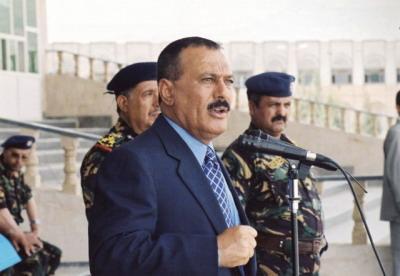
 President affirms necessity of qualitative structure of ant-terror forces



