Almotamar.net - Vice President Abid Rabu Mansour Hadi said Saturday sport is the best means for enhancing relations between propels and developing them in different fields where it does not need diplomatic arrangements or efforts.
During his meeting Saturday with head of the international judo federation Mayos Fayez and the heads of the Asian judo federation the Kuwaiti Ubaid al-Inizi , the Arab Qatari federation Ubaid al-Marikhi, secretary general of the Tunisian international federation Dr Al-Hadi Thu Deeb, deputy chairman of the Asian judo federation and the secretary general of the Asian federation , the Vice President added that the more attentions nations give to sport they would achieve tangible success in all directions , especially that the cold war has ended and the world has become a small village and the wanted thing is steady work in a good way in this aspect.
The Vice President expressed his happiness for holding the championship in Yemen for the first time and he affirmed the importance of building a sports centre for the judo with allocation in the next year budget.
Chairman of the international federation for judo expressed his gratitude to the Vice President for the apparent interest in this field, affirming that sport is always the best way for development of self abilities and the key to relations among nations. He said the federation would offer all types of support including the supply and furbish the centre proposed to be built.
The United Arab Emirates acknowledged on Tuesday that two of its pilots were killed when their military aggression plane crashed over Jawf province, a military official said
The official added that the aggressive crashed plane was an apache that was
Artillery of the army and popular shelled a gathering of Saudi-paid mercenaries in al-Moqadra area in Serwah district of Marib province, a military official said on Tuesday.
Meanwhile, dozens of Saudi-paid mercenaries were killed and others injured in Wadi al-Theek in the district, the official added.
The army and popular forces carried out on Monday unique military operations in Taiz province.
A military official said that a number of Saudi-paid mercenaries were killed at the hands of the army and popular forces in al-Jazami Hill in al-Kadaha area in al-Ma'afer district.
A Saudi aggression fighter jet targeted a citizen's car driving in Fara area of Kutaf district in Saada province overnight, killing the driver and injuring his friend, a security official said on Monday.
The army artillery and popular committees launched a fierce attack on Saudi-paid mercenaries' sites in Jawf province, a military official said on Monday.
The attack destroyed a military vehicle belonging to the mercenaries and killed all on board in Sabran area in khab and shaaf district.
Scores of Saudi enemy soldiers were killed and injured on Sunday when the army and popular forces repelled a Saudi military attempt to sneak into Shurfah site in the border province of Najran, a military official said.
The operation was accomplished successfully against the Saudi
The army and popular committees have killed a total of 18 Saudi-paid mercenaries in sniper operations over the past hours in the central province of Marib, a military official said on Sunday.
Ten mercenaries were killed in Nehm district and eight others were killed in Serwah district, said the official.
Saudi aggression warplanes have launched more than 49 airstrikes over the past hours on several residential areas across Yemen, a security official said on Sunday.
The airstrikes targeted the areas of Malahiz and Husama in Dhahir district, and areas Thuban, Masahif and Sdad in Bakim district of northern Saada province.


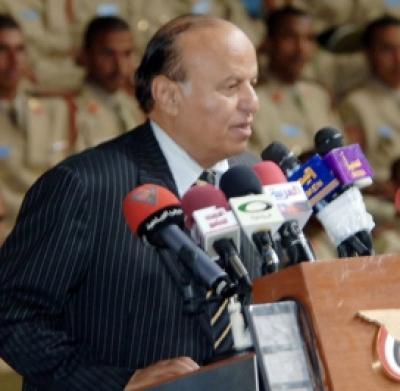
 Sport the best means for relations development among peoples: Hadi



