Almotamar.net - President Mohammed Hosni Mubarak has reiterated Egypt’s stand supporting Yemen, its unity, security and stability and its rejection of any foreign interferences in its internal affairs.
President Mubarak’s remarks came darting his meeting in Cairo on Saturday the Yemen’s Commander of the Republican Guard General Ahmed Ali Abdullah Saleh who conveyed to President Mubarak a letter from the Yemeni President Ali Abdullah Saleh dealing with the distinguished relations of the two countries, areas of cooperation and ways of enhancing and developing them, in addition to main Arab and regional issues and developments of concern to the two countries.
General Ahmed Ali Abdullah Saleh expressed thanks and appreciation of Yemen’s leadership, government and people for the Egyptian leadership on its genuine Arab nationalist stands supportive for Yemen and its unity, security and stability.
On the other hand, General Saleh held a meeting with the Egyptian commander in chief of the armed forces, the minister of defence General Mohammed Hussein Tantawi and discussed with him a number of topics related to areas of cooperation between Yemen and Egypt.
The Yemeni official also met the Head of Egyptian General Intelligence General Omar Mahmoud Suleiman and discussed with him aspects of bilateral relations.
General Ahmed Ali Abdullah Saleh paid a visit to the Yemeni members of the armed forces and security wounded in the war in Saada, and receiving treatment at the Egyptian Armed forces Hospital
The United Arab Emirates acknowledged on Tuesday that two of its pilots were killed when their military aggression plane crashed over Jawf province, a military official said
The official added that the aggressive crashed plane was an apache that was
Artillery of the army and popular shelled a gathering of Saudi-paid mercenaries in al-Moqadra area in Serwah district of Marib province, a military official said on Tuesday.
Meanwhile, dozens of Saudi-paid mercenaries were killed and others injured in Wadi al-Theek in the district, the official added.
The army and popular forces carried out on Monday unique military operations in Taiz province.
A military official said that a number of Saudi-paid mercenaries were killed at the hands of the army and popular forces in al-Jazami Hill in al-Kadaha area in al-Ma'afer district.
A Saudi aggression fighter jet targeted a citizen's car driving in Fara area of Kutaf district in Saada province overnight, killing the driver and injuring his friend, a security official said on Monday.
The army artillery and popular committees launched a fierce attack on Saudi-paid mercenaries' sites in Jawf province, a military official said on Monday.
The attack destroyed a military vehicle belonging to the mercenaries and killed all on board in Sabran area in khab and shaaf district.
Scores of Saudi enemy soldiers were killed and injured on Sunday when the army and popular forces repelled a Saudi military attempt to sneak into Shurfah site in the border province of Najran, a military official said.
The operation was accomplished successfully against the Saudi
The army and popular committees have killed a total of 18 Saudi-paid mercenaries in sniper operations over the past hours in the central province of Marib, a military official said on Sunday.
Ten mercenaries were killed in Nehm district and eight others were killed in Serwah district, said the official.
Saudi aggression warplanes have launched more than 49 airstrikes over the past hours on several residential areas across Yemen, a security official said on Sunday.
The airstrikes targeted the areas of Malahiz and Husama in Dhahir district, and areas Thuban, Masahif and Sdad in Bakim district of northern Saada province.


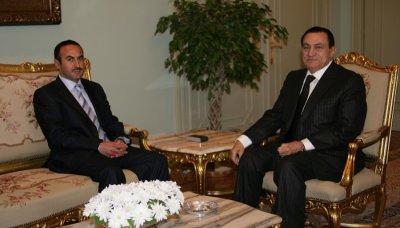
 Mubarak renews support for Yemen & its unity, rejects foreign interference



