Almotamar.net - Official sources have said Monday that military and security units have in the past hours cleared many areas nearby Al-Samaa Mountain from the Houthi elements of terror and sabotage in Saada , north Yemen, pointing out the destruction of many hideouts , barricades and trenches the terrorists set up near Al-Samaa Mountain.
Other military and security units attacked terrorist elements that infiltrated into some farms in Al- Uqab area and inflicted on them heavy losses sand defeated other elements that treed to take positions near Al-Maqash and inflicted heavy losses on them.
Army fighters have also repelled terrorist elements’ infiltration attempt near Al-Qufl position and inflicted heavy loses on them.
Other military units dealt painful strikes to the terrorist elements in the farms and houses of Ali Tami, and the farms of Hamida and Abu Krush.
In Al-Malahidh axis army units raided the terrorist elements in Al-Mudawara height in Ghafira and the raid resulted in destroying the hideouts, barricades and trenches set by those elements there and captured a number of them.
Other military units managed to control two heights near Al-Khazin Mountain after they defeated the terrorist elements from them.
In Sufyan axis army and security fighters destroyed terrorists’ hideouts near Al-Jatham and the north-east heights of Shabariq.
The United Arab Emirates acknowledged on Tuesday that two of its pilots were killed when their military aggression plane crashed over Jawf province, a military official said
The official added that the aggressive crashed plane was an apache that was
Artillery of the army and popular shelled a gathering of Saudi-paid mercenaries in al-Moqadra area in Serwah district of Marib province, a military official said on Tuesday.
Meanwhile, dozens of Saudi-paid mercenaries were killed and others injured in Wadi al-Theek in the district, the official added.
The army and popular forces carried out on Monday unique military operations in Taiz province.
A military official said that a number of Saudi-paid mercenaries were killed at the hands of the army and popular forces in al-Jazami Hill in al-Kadaha area in al-Ma'afer district.
A Saudi aggression fighter jet targeted a citizen's car driving in Fara area of Kutaf district in Saada province overnight, killing the driver and injuring his friend, a security official said on Monday.
The army artillery and popular committees launched a fierce attack on Saudi-paid mercenaries' sites in Jawf province, a military official said on Monday.
The attack destroyed a military vehicle belonging to the mercenaries and killed all on board in Sabran area in khab and shaaf district.
Scores of Saudi enemy soldiers were killed and injured on Sunday when the army and popular forces repelled a Saudi military attempt to sneak into Shurfah site in the border province of Najran, a military official said.
The operation was accomplished successfully against the Saudi
The army and popular committees have killed a total of 18 Saudi-paid mercenaries in sniper operations over the past hours in the central province of Marib, a military official said on Sunday.
Ten mercenaries were killed in Nehm district and eight others were killed in Serwah district, said the official.
Saudi aggression warplanes have launched more than 49 airstrikes over the past hours on several residential areas across Yemen, a security official said on Sunday.
The airstrikes targeted the areas of Malahiz and Husama in Dhahir district, and areas Thuban, Masahif and Sdad in Bakim district of northern Saada province.


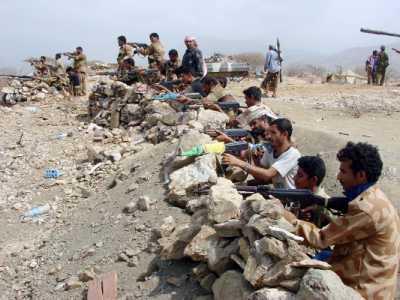
 Army clears areas nearby Al-Samaa Mountain, controls 3 heights near Al-Khazin Mount



