Almotamar.net, Saba - Sana'a- President Ali Abdullah Saleh chaired Sunday a joint meeting of the security and military leaders.
In the presence of Vice President Abdo Rabbo Mansour Hadi, the meeting reviewed the progress of the combat and operational training plans and programs for 2011 in the different armed and security units and the evaluation of the performance and implementation for the last period.
The outcomes of the last meeting's decisions held last week were touched on in the meeting, which listened to a report of Defense Ministry on the armed forces' conditions and requirements and a report of Interior Ministry on the security situation in the capital Sana'a and other governorates in the light of the current national developments and the aggressions committed by affiliates of the Joint Meeting Parties (JMP) and insurgents.
The meeting also dealt with another reports on the country's economic situation that is escalating every day owing to the outlaws' acts, including blocking roads and attacking on the oil, gas and electricity facilities.
Moreover, the political developments in the country were reviewed in the meeting and the exerted efforts to put an end to the ongoing political crisis in the country based on the Gulf's initiative.
The meeting made several decisions and recommendations to the competent bodies to adopt the necessary measures to alleviate the citizens' suffering and provide their requisite needs.
The United Arab Emirates acknowledged on Tuesday that two of its pilots were killed when their military aggression plane crashed over Jawf province, a military official said
The official added that the aggressive crashed plane was an apache that was
Artillery of the army and popular shelled a gathering of Saudi-paid mercenaries in al-Moqadra area in Serwah district of Marib province, a military official said on Tuesday.
Meanwhile, dozens of Saudi-paid mercenaries were killed and others injured in Wadi al-Theek in the district, the official added.
The army and popular forces carried out on Monday unique military operations in Taiz province.
A military official said that a number of Saudi-paid mercenaries were killed at the hands of the army and popular forces in al-Jazami Hill in al-Kadaha area in al-Ma'afer district.
A Saudi aggression fighter jet targeted a citizen's car driving in Fara area of Kutaf district in Saada province overnight, killing the driver and injuring his friend, a security official said on Monday.
The army artillery and popular committees launched a fierce attack on Saudi-paid mercenaries' sites in Jawf province, a military official said on Monday.
The attack destroyed a military vehicle belonging to the mercenaries and killed all on board in Sabran area in khab and shaaf district.
Scores of Saudi enemy soldiers were killed and injured on Sunday when the army and popular forces repelled a Saudi military attempt to sneak into Shurfah site in the border province of Najran, a military official said.
The operation was accomplished successfully against the Saudi
The army and popular committees have killed a total of 18 Saudi-paid mercenaries in sniper operations over the past hours in the central province of Marib, a military official said on Sunday.
Ten mercenaries were killed in Nehm district and eight others were killed in Serwah district, said the official.
Saudi aggression warplanes have launched more than 49 airstrikes over the past hours on several residential areas across Yemen, a security official said on Sunday.
The airstrikes targeted the areas of Malahiz and Husama in Dhahir district, and areas Thuban, Masahif and Sdad in Bakim district of northern Saada province.


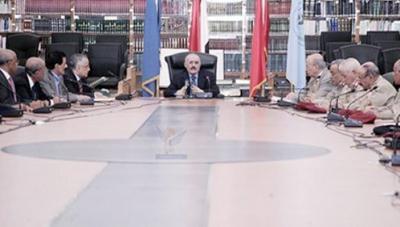
 Saleh presides over security and military meeting



