Almotamar.net-saba - An American official voiced Wednesday confidence that February 21 would be a real moving towards comprehensive reforms and make the necessary changes the Yemeni people desires.
The statement made by US Under Secretary of State for Political Affairs Wendy Sherman, the US envoy to Yemen, who arrived in Sana'a today [Wednesday] on an official visit to show the US support for Yemen.
During her meeting with Vice President Abdo Rabbo Mansour Hadi, Ms. Sherman expressed the US and the international community's appreciation of the Vice President and political powers' efforts to carry out the Gulf initiative.
The US would be an effective partner with Yemen to overcome the crisis's aftermaths, she said, stressing that Yemen's security and unity are a strategic matter to the US.
The Vice President briefed the US official on the crisis's consequences in security, political and economic fields and its critical impacts on the stability and unity of the country.
He praised the American direct support to Yemen in this regard, pointing to the efforts of the US ambassador Gerald Feierstein, alongside with ambassadors of the UN Security Council permanent members, European Union and Gulf Cooperation Council, to save Yemen from separation and a civil war was about to be broken out.
Hadi and Ms. Sherman touched on several issues concerning the fight on terror, especially al-Qaeda, and the developments in Rad'a city which has been cleansed from terrorists
The United Arab Emirates acknowledged on Tuesday that two of its pilots were killed when their military aggression plane crashed over Jawf province, a military official said
The official added that the aggressive crashed plane was an apache that was
Artillery of the army and popular shelled a gathering of Saudi-paid mercenaries in al-Moqadra area in Serwah district of Marib province, a military official said on Tuesday.
Meanwhile, dozens of Saudi-paid mercenaries were killed and others injured in Wadi al-Theek in the district, the official added.
The army and popular forces carried out on Monday unique military operations in Taiz province.
A military official said that a number of Saudi-paid mercenaries were killed at the hands of the army and popular forces in al-Jazami Hill in al-Kadaha area in al-Ma'afer district.
A Saudi aggression fighter jet targeted a citizen's car driving in Fara area of Kutaf district in Saada province overnight, killing the driver and injuring his friend, a security official said on Monday.
The army artillery and popular committees launched a fierce attack on Saudi-paid mercenaries' sites in Jawf province, a military official said on Monday.
The attack destroyed a military vehicle belonging to the mercenaries and killed all on board in Sabran area in khab and shaaf district.
Scores of Saudi enemy soldiers were killed and injured on Sunday when the army and popular forces repelled a Saudi military attempt to sneak into Shurfah site in the border province of Najran, a military official said.
The operation was accomplished successfully against the Saudi
The army and popular committees have killed a total of 18 Saudi-paid mercenaries in sniper operations over the past hours in the central province of Marib, a military official said on Sunday.
Ten mercenaries were killed in Nehm district and eight others were killed in Serwah district, said the official.
Saudi aggression warplanes have launched more than 49 airstrikes over the past hours on several residential areas across Yemen, a security official said on Sunday.
The airstrikes targeted the areas of Malahiz and Husama in Dhahir district, and areas Thuban, Masahif and Sdad in Bakim district of northern Saada province.


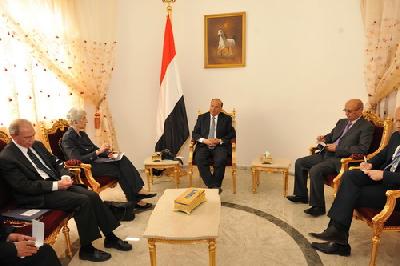
 Yemen's security is strategic matter to US: official says



